
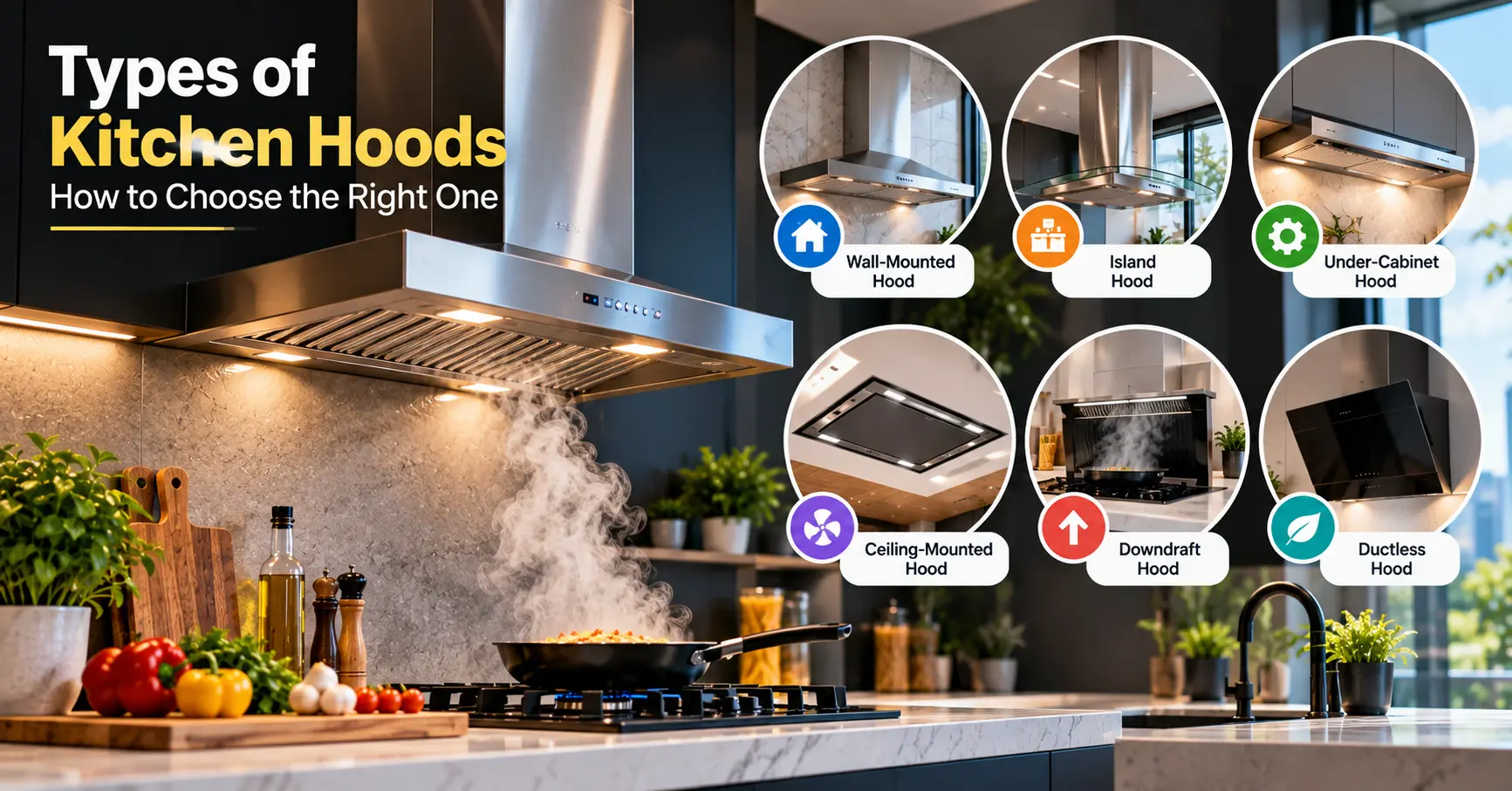
Types of Kitchen Hoods How to Choose the Right One
Think about the last time you fried something in a closed kitchen. The smell stayed for hours, the cabinets felt sticky, and the window was no help. A good kitchen hoods fixes most of that. It pulls smoke, steam, and grease away from the cooktop, so your kitchen stays cleaner and easier to breathe in.
Hoods come in several types, and they don’t all suit the same kitchen. Some hang over an island, some tuck under a cabinet, and one rises out of the counter. You also have to choose between ducted and ductless. Here’s a plain guide to each, so you can pick a range hood that fits your space and your cooking.
What are the main types of kitchen hoods?
There are five you’ll see most often:
- Wall-mounted range hoods
- Under-cabinet range hoods
- Island range hoods
- Downdraft range hoods
- Microwave hood combinations
Which one is right depends on your layout, how heavily you cook, and the look you want. Let’s go through them one by one.
Wall-mounted range hoods
This is the one most people picture. It’s fixed to the wall above the stove and often has a chimney shape that goes up to the ceiling.
It tends to be a strong performer because it sits right above the cooking area and has room for a bigger fan. It also looks good, and stainless steel and black finishes suit most kitchens. If your stove is against a wall and you have the height, this is a safe choice. It comes in ducted and ductless versions.
Under-cabinet range hoods
If there’s a cabinet right above your stove, this type slides in underneath it. It’s smaller and lower than a wall-mounted hood, so it doesn’t take much visual space, and the cabinet above stays usable for storage.
It’s a sensible pick for compact kitchens and flats where every inch counts. It still clears smoke, steam, and odors well for everyday cooking, and you can get it in ducted or ductless form. Just check that its width matches your cooktop.
Island range hoods
Island hoods hang from the ceiling over a cooktop that sits in the middle of the kitchen. There’s no wall behind them, so they’re visible from every side, and many people treat them as a design feature.
Because the air around an island moves in every direction, the fan needs to be powerful enough to catch what rises from the pan. They also need a ceiling that can support them. They look great, but they take more planning and usually cost more to install.
Downdraft range hoods
A downdraft hood is built into the counter, usually behind the cooktop. When you cook, it rises up. When you’re done, it slides back down and disappears.
That makes it a good fit for minimalist kitchens or open layouts where a hood above the stove would block the view. The air gets pulled downward through vents at counter level. One honest note: because smoke and steam naturally rise, downdraft hoods can struggle with tall pots and heavy frying. They suit light to moderate cooking better.
Microwave hood combinations
This is a microwave and a hood in one unit, mounted above the cooktop. It saves counter space, which is why people like it for small kitchens.
The trade-off is power. The extraction fan in a combination unit is usually weaker than a dedicated hood, so if you cook with a lot of oil or strong spices every day, you may find it isn’t enough. For lighter cooking, it’s a handy all-in-one.
Not sure which type suits your kitchen? Call or WhatsApp Generaltec on +971 6 881 2883, or email support@generaltec.com, and tell us about your kitchen layout.
Ducted vs. ductless kitchen hoods
Before you buy, you need to know how the hood gets rid of the air.
A ducted hood pulls air in and sends it outside through a duct. It removes smoke, steam, grease, heat, and smells from the room entirely, so it’s the more effective option. The catch is installation. The duct has to run through a wall or ceiling to the outside, and that isn’t possible in every home. In an apartment, check with your building management first.
A ductless hood filters the air through a charcoal filter and sends it back into the kitchen. It’s easier to install because there’s no duct, so it suits flats and rentals. It doesn’t remove heat and moisture as well as a ducted one, and the filter needs replacing regularly or it stops doing its job.
If you can run a duct, go ducted. If you can’t, a ductless hood with a good filter is still far better than nothing.
FAQs
What is a kitchen hood?
A kitchen hood, also called a range hood, is an appliance above or near your cooktop. It pulls smoke, steam, grease, and cooking smells away from the kitchen.
Do I really need a range hood?
If you cook regularly, yes. Without one, grease settles on cabinets and walls, and smells hang around. A hood keeps the air cleaner and your kitchen easier to clean.
What is the difference between ducted and ductless hoods?
A ducted hood sends air outside through a duct. A ductless hood filters the air and puts it back in the room. Ducted ones remove more, and ductless ones are easier to install.
Which type of hood is best for a small kitchen?
Under-cabinet hoods and microwave combinations save the most space. A compact wall-mounted hood can work too, if you have wall room above the stove.
Are ductless hoods effective?
They help, especially for grease and smells, but they’re less effective than ducted ones at removing heat and moisture. The charcoal filter needs regular replacing to keep working well.
How high should a range hood be installed above the stove?
It depends on the type and the manufacturer, so check the installation guide. Too low can be unsafe and too high won’t catch much smoke.
How often should I clean or replace the hood filter?
Clean grease filters regularly, often every month or so if you cook a lot. Charcoal filters on ductless hoods can’t be washed and need replacing, as the manufacturer advises.
Can I install a hood without a duct?
Yes. Choose a ductless model, which recirculates filtered air back into the kitchen. It’s a common option in flats where ducting isn’t possible.
Conclusion
Range hoods come in several types, and each suits a different kitchen. Wall-mounted ones are strong all-rounders, under-cabinet ones save space, island hoods become a centerpiece, downdrafts hide away, and microwave combinations do two jobs. Then decide between ducted and ductless based on what your home allows. Choose the one that fits your layout and the way you cook, and your kitchen will stay fresher and cleaner. At Generaltec, we’re happy to help you work out which one that is.
Ready to choose? Contact Generaltec on +971 6 881 2883 (WhatsApp) or email support@generaltec.com.






Add comment