
What Are the Benefits of a Front Load Washing Machine?
Laundry day. You open the machine and the shirts come out twisted, the towels are still damp, and the water bill keeps climbing. Not fun.
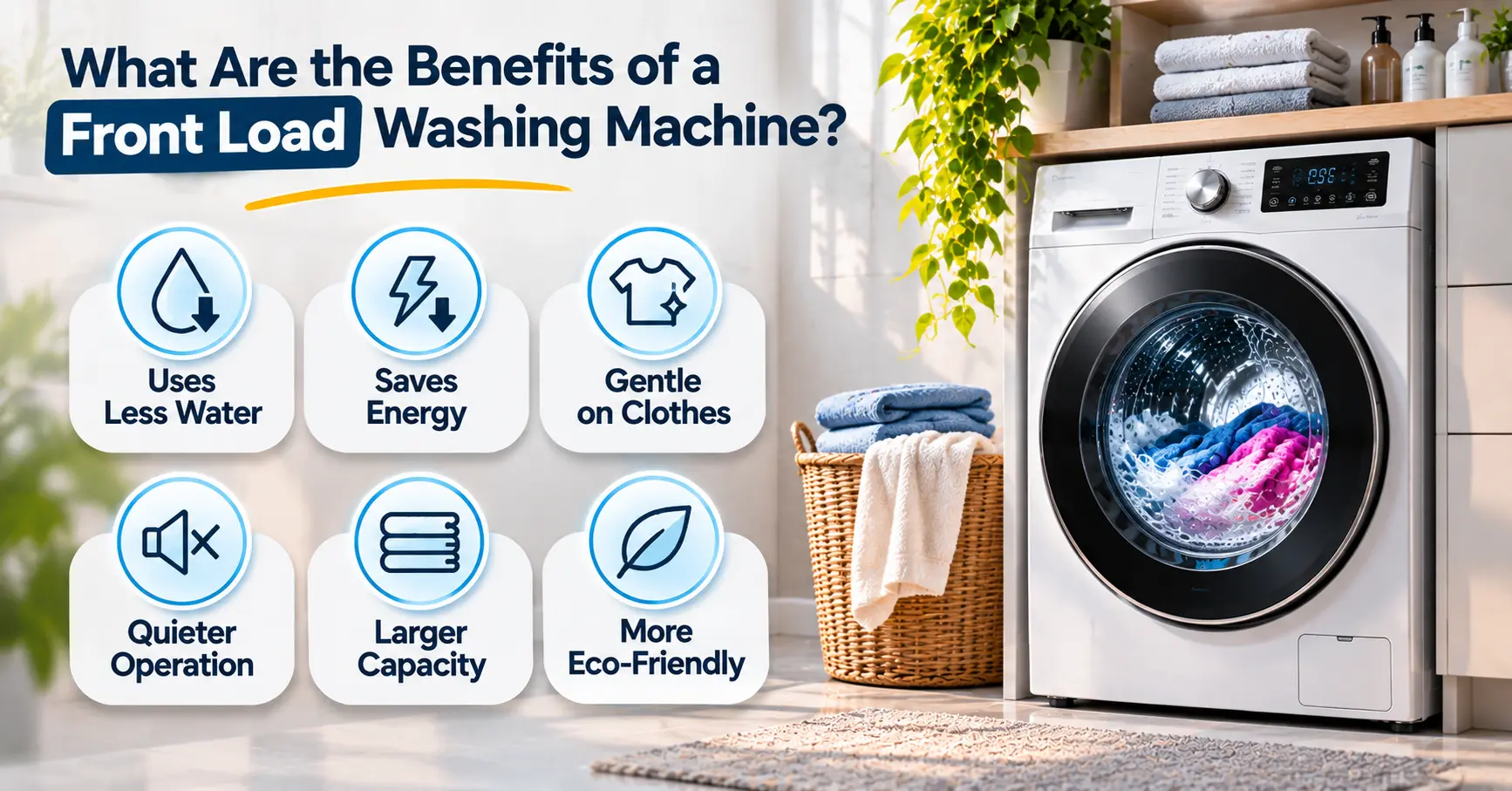
That’s why many families look at a front load washing machine. So what are the benefits of a front load washing machine? In short, it uses less water and energy, treats clothes more gently, and spins out more water so clothes dry faster. It can also stack with a dryer and runs quieter than many top loaders.
Nothing is perfect, though. Front loaders cost more up front and need a little care. We’ll cover that too.
At GeneralTec, we want you to buy appliances that fit your home and your budget. In this guide, I’ll explain each benefit in plain words, compare front load and top load, and share tips for choosing and caring for one. No jargon. Let’s start with the quick answer.
The benefits at a glance
| Benefit | What it means for you |
| Uses less water | Lower water use on every wash |
| Uses less energy | Smaller power bills over time |
| Gentle on clothes | Fabrics last longer and look better |
| High spin speed | Clothes come out drier and dry faster |
| Quieter running | Less noise in the house |
| Stackable design | Saves floor space |
| More wash programs | Better care for different fabrics |
Now let’s look at each one properly.
1. It saves water
A front load machine fills the drum only partway. The clothes tumble through the water, rather than sitting in a full tub. Gravity does a lot of the work.
The result? Many front loaders use roughly a third to half less water than a top loader with an agitator. The exact savings depend on the model. But if water costs you money, or you pump it yourself, that adds up.
2. It saves energy and money
Less water means less water to heat. Modern motors and smart spin settings help too. Many front loaders are built as an energy efficient washing machines, so your electricity bill gets a little lighter.
Yes, the purchase price is usually higher. But over the years, lower water and power use can make up some of the difference.
3. It’s gentle on clothes
Here’s the part people love. A front loader lifts clothes and lets them drop, again and again. There’s no agitator twisting and pulling them.
That tumbling action is kinder to fabrics. Shirts keep their shape. Colors stay brighter for longer. Delicate items like silk and lace get better care, especially when the machine has a gentle program.
4. It spins faster, so clothes dry faster
Front loaders usually spin much faster than top loaders. Some models reach 1200 to 1400 RPM. That pulls more water out before you take the clothes out.
Why does it matter? In Pakistan’s humid summers and rainy season, clothes can take forever to dry on the line. Drier clothes from the machine means less waiting. And if you use a dryer, it works for less time.
One small tip. Very high spin can crease some fabrics. Most machines let you lower the spin speed.
5. It runs quieter
Top loaders with agitators are often noisier. A good front loader is usually calmer, which helps if your laundry area is next to a bedroom or lounge.
6. It saves space
A front load machine can sit under a counter in many homes. Many models are also stackable with a matching dryer. In a small flat, that’s a big plus.
7. It offers more wash programs
Front loaders often come with lots of programs. Cotton, synthetics, delicates, quick wash, heavy duty, and more. A fully automatic setup does the filling, washing, rinsing, and spinning for you. A fully automatic washing machine like this is a real time saver.
Not sure which front loader suits your home?
Tell us your family size, your space, and your budget. GeneralTec can help you pick a model that fits. Call or WhatsApp +971 6 881 2883 or email Ac.pk@generaltec.com.
Front load vs top load washing machine
Here’s how the two types compare. This is the heart of any front load vs top load washing machine decision.
| Feature | Front load | Top load |
| Water use | Usually lower | Usually higher |
| Energy use | Usually lower | Usually higher |
| Fabric care | Gentle tumbling | Agitator can be rougher |
| Spin speed | Usually higher | Usually lower |
| Loading | You bend down | Easier standing up |
| Cycle time | Often longer | Often shorter |
| Upfront price | Usually higher | Usually lower |
| Upkeep | Needs gasket care | Needs less cleaning |
| Space | Can be stacked | Lid needs clearance above |
Neither one is perfect. A top loader is faster and easier on your back. A front loader saves more water and treats clothes better.
What to know before you buy
Let’s be honest about the downsides.
- Higher price: Front loaders usually cost more at the start
- Longer cycles: Many wash programs take more time
- Gasket care: The rubber door seal can collect moisture and grow mould
- Bending: You’ll need to bend down to load and unload
None of these are deal breakers. They just need a little planning.
How to look after your front loader
If you’re wondering how to clean a front load washing machine, the good news is that it’s simple.
- Wipe the rubber door seal dry after each wash
- Leave the door slightly open between washes, so moisture can escape
- Run a hot cleaning cycle once in a while
- Clean the detergent drawer and the drain filter
- Use the right amount of detergent, since too much leaves residue
A little care stops bad smells and keeps the machine running well. Most front load washing machine problems, like odours and slow draining, come from moisture and blocked filters.
How to choose the right front load machine
Start with the size of your family. Then look at the details.
| Household | Drum size to consider |
| 1 to 2 people | Around 6 kg |
| Small family | 6 to 8 kg |
| Larger family | 9 kg or more |
Then check these:
- Spin speed: Higher means drier clothes
- Wash programs: Look for the ones you’ll really use
- Energy rating: Efficient models save more over time
- Noise level: Check it if the machine is near a bedroom
- Warranty and service: Ask what’s included
GeneralTec can help you compare models if you’re not sure where to begin. The best front load washing machine is the one that fits your household, not the one with the longest feature list.
Mistakes to avoid
People often overload the drum, which hurts the wash and strains the motor. Some use too much detergent, which leaves residue and smells. Others close the door tight after every wash, which traps moisture. And a few buy a drum that’s too small for their family.
FAQs
What are the main benefits of a front load washing machine?
It uses less water and energy, is gentler on clothes, spins faster, and often runs quieter. It can also be stacked to save space.
Do front load machines really save water?
Yes, they usually use less water than top loaders. The exact savings depend on the model and how you use it.
Are front load machines gentler on clothes?
Yes. The tumbling action causes less wear than an agitator, so clothes tend to last longer.
Why do front load washing machines smell sometimes?
Moisture gets trapped in the rubber door seal. Wipe it dry, leave the door ajar, and clean the machine regularly.
Is a front load or a top load machine better?
It depends. Front loaders save more water and are gentler. Top loaders are faster and easier to load. Pick the one that fits your habits.
What size front load machine do I need?
Around 6 kg suits 1 to 2 people. A small family can use 6 to 8 kg. Larger families may want 9 kg or more.
Are front load washing machines more expensive?
They usually cost more upfront. Lower water and energy bills can help balance that over time.
Conclusion
The benefits of a front load washing machine are clear. It saves water and energy, treats clothes gently, spins out more water, and uses space well. The trade offs are a higher price and a bit of care for the door seal.
If those suit you, a front loader is a smart buy for your home.
Ready to choose? Contact GeneralTec on WhatsApp at +971 6 881 2883 or email Ac.pk@generaltec.com, and we’ll help you find the right machine.







Add comment