

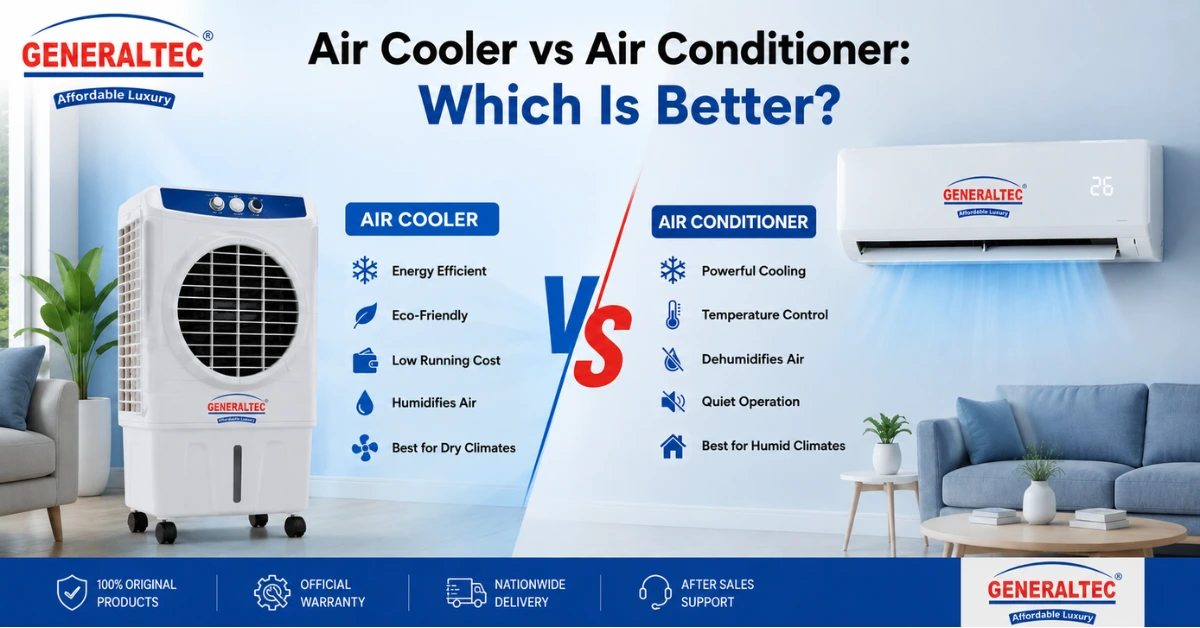
Air Cooler vs Air Conditioner: Which Is Better?
Hot and brutal summer. Then only one question emerges in the minds, which should we buy, an Air cooler vs air conditioner ? Which would be the best choice? Both work the same to cool the room, but in a different way. What is the key difference between their work? Both have their fans. But they work in completely different ways, and choosing the wrong one for your situation means spending money on something that will frustrate you every single day.
We’ll now dive into the comparison between air coolers vs air conditioners, based on weather, cost, energy consumption, and practical use. If you’re not sure about which option is best for the layout of your own home, the following will guide you towards deciding which works best for your space. And if it is a trusted recommendation and excellent service that you are looking for, Generaltec is the way to go to start your search.
How Each One Actually Works
Before comparing performance, it helps to understand what is happening inside each machine.
How an Air Cooler Works
Warm air from the room enters the evaporative air cooler and passes through wet honeycomb cooling pads. During this process, the water in the tank absorbs heat from the air and makes it cool, and is pushed back in the room by a fan.
This process is simple and ecofriendly because there is no use of refrigerant gas and consume very low electricity. An air cooler is the best choice for a dry climate. It needs the best ventilation to keep the air fresh.
How an Air Conditioner Works
An air conditioner uses a compressor, refrigerant, a condenser, and an evaporator coil to remove heat from indoor air entirely. The refrigerant absorbs heat from inside the room, carries it outside, and releases it there. What comes back into the room is genuinely cold, dehumidified air.
A split AC or inverter air conditioner does this continuously and quietly, maintaining a set temperature regardless of how hot it gets outside. The BTU rating of the unit determines how much space it can cool effectively.
Cooling Performance: The Honest Comparison
This is where the two technologies genuinely diverge.
Air Cooler Performance
An evaporative cooler can drop the room temperature by 5 to 10 degrees Celsius in the right conditions. In a dry climate with good air circulation and an open window, it is genuinely comfortable cooling at a fraction of the running cost of an AC.
But in humid weather, evaporative cooling loses effectiveness fast. When the air already holds a lot of moisture, the honeycomb cooling pads cannot evaporate water efficiently. The result is air that feels damp and heavy rather than cool and fresh.
Air Conditioner Performance
A split air conditioner or inverter AC delivers consistent cooling performance regardless of humidity. It controls both temperature and dehumidification simultaneously, which is why rooms with AC feel genuinely comfortable even in the most brutal summer heat.
The cooling capacity of a properly sized AC unit keeps the room at your chosen temperature without fluctuation. That level of control is something an air cooler simply cannot match in extreme heat or high humidity conditions.
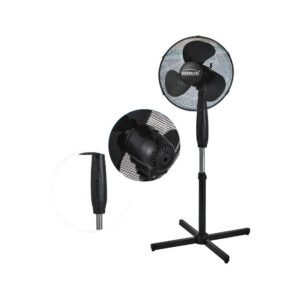
Generaltec 16 Inch Electric Fan Adjustable Height Oscillation
Original price was: د.إ160.د.إ70Current price is: د.إ70.
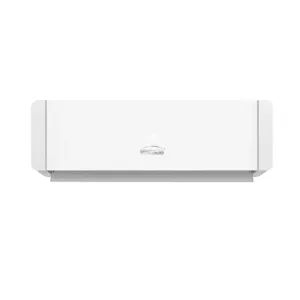
Generaltec 1 Ton Inverter Split AC GSIAC12IN3S – Golden Fin, T3
Original price was: د.إ1,800.د.إ1,340Current price is: د.إ1,340.Out of stock
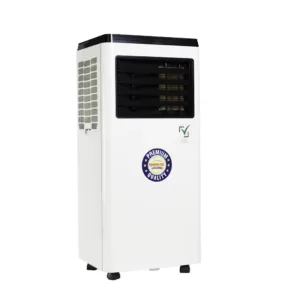
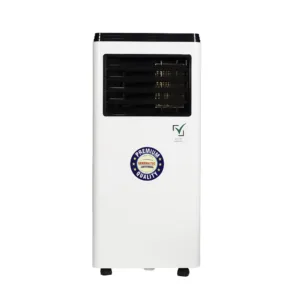
Generaltec 1 Ton Portable AC GPAC12W Remote, Rotary Compressor
Original price was: د.إ1,100.د.إ840Current price is: د.إ840.Electricity Consumption: What It Actually Costs to Run
This is the number most people care about, and the difference is significant.
Air Cooler Running Costs
A standard portable cooler uses between 100 and 350 watts, depending on size and fan speed. Running it for 8 hours a day costs a fraction of what an AC would. For households watching their electricity bills carefully, this matters enormously.
Air Conditioner Running Costs
A standard split AC uses between 900 and 2,000 watts, depending on its cooling power and BTU rating. An inverter technology unit adjusts its compressor speed based on the current cooling load, which cuts energy consumption significantly compared to older fixed-speed models.
Over a full summer, the difference in running costs between an air cooler and an AC can be substantial. But that gap narrows when you factor in that the AC actually cools the space properly in conditions where the cooler struggles.
Not sure which cooling solution fits your home? Contact Generaltec at +971 6 881 2883 or support@generaltec.com for honest guidance on the right unit for your space and climate.
Air Cooler vs Air Conditioner Full Comparison Table
| Feature | Air Cooler | Air Conditioner |
| Cooling Method | Evaporative cooling | Refrigerant cycle |
| Energy Consumption | 100 to 350 watts | 900 to 2,000 watts |
| Works Best In | Dry climates | Any climate |
| Humidity Control | Adds moisture | Removes moisture |
| Purchase Cost | Lower | Higher |
| Installation | None required | Professional needed |
| Maintenance | Clean pads, refill water tank | Filter cleaning, annual service |
| Eco-Friendly | Yes, water-based cooling | Depends on refrigerant type |
| Noise Level | Moderate fan noise | Quiet (inverter models) |
| Best For | Dry regions, budget cooling | Humid climates, consistent comfort |
Environmental Impact
Air coolers use no refrigerant gas and have a minimal carbon footprint compared to air conditioners. The natural cooling process through water evaporation is genuinely ecofriendly and produces no greenhouse gas emissions from the unit itself.
Air conditioners use refrigerants, including R32 refrigerant, which has a lower ozone depletion potential than older alternatives but still carries an environmental cost. That said, modern inverter technology units use significantly less electricity than older models, which reduces their overall environmental impact over a season of use.
If sustainable cooling and green cooling technology matter to your household, an air cooler is the lower-impact choice in the right climate.
Which One Should You Actually Buy?
Buy an air cooler if:
- You live in a dry climate with low humidity
- Your electricity bill is a primary concern
- You need a portable, no-installation cooling solution
- You want an environmentally friendly option
- Your cooling needs are seasonal and moderate
Buy an air conditioner if:
- You live in a humid climate where evaporative cooling underperforms
- You need consistent temperature control regardless of outside conditions
- You want proper dehumidification and cleaner filtered air
- You are cooling a bedroom overnight or an office space continuously
- You are dealing with extreme summer heat above 42 degrees Celsius
For most households in the UAE, where ambient temperature regularly hits extremes and humidity control is essential for genuine comfort, a quality split AC or inverter air conditioner delivers results that an air cooler simply cannot match during peak summer months.
Generaltec offers a range of cooling solutions built for hot climate performance. Reach out at +971 6 881 2883 or support@generaltec.com to find the right unit for your space.
Conclusion
The debate over which is the best choice, an air cooler or an air conditioner, does not have a specific single winner. The answer to this debate depends on your climate, budget, and space. The air cooler is affordable, less energy consumer, and works best in a dry climate, whereas an air conditioner is costly, energy consumer, but provides reliable and consistent cooling performance in every climatic condition.
Think about your climate first, then your budget, then your space. Generaltec makes both decisions easier with products designed for real-world heat. Call the team, explain your situation, and get a straight answer on what actually makes sense for your home.
FAQs
What is the main difference between an air cooler and an air conditioner?
An air cooler makes the air cool through a simple process with water and a honeycomb, while an air conditioner uses a compressor and refrigerant to remove the heat from the room.
Which uses less electricity, an air cooler or an AC?
If we compare the consumption of electricity, obviously an air cooler is the winner, it uses mostly 100 to 35o watt as compared to an air conditioner that uses 900 to 2000 watts
Can an air cooler work in humid weather?
No, an air cooler is best for a dry climate; in a moisture its performance decreases.
Which is better for sleeping, an air cooler or AC?
For most people, an inverter AC is better for sleeping. It runs quietly, maintains a steady indoor temperature, and does not require an open window. Air coolers work in dry climates, but fan noise and variable cooling can disrupt sleep.
What are the disadvantages of air coolers?
In the humid season, the working efficiency of an air cooler is affected, requiring a regular refill of the water tank and proper cleaning of the honeycombs after one week, needs an open window for proper ventilation.
Which cooling appliance is better for allergies?
An air conditioner with quality filters is better for allergy sufferers, because it filters dust and pollen from the air and makes it clean.
Is an air cooler more ecofriendly than an AC?
Yes. Air coolers use water based cooling with no refrigerant gas, producing no direct greenhouse gas emissions. They also consume far less electricity.










Add comment